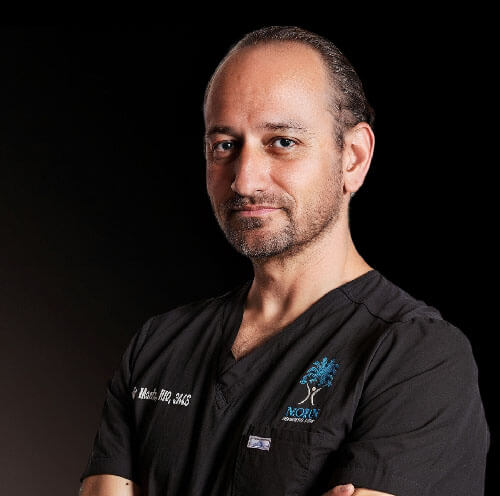

Duodenal Switch Surgery Los Angeles, CA
The duodenal switch (BPD-DS) is the most powerful weight-loss operation in bariatric surgery — and the least talked about. It combines a sleeve gastrectomy with an intestinal bypass, producing average excess-weight loss of 75 to 85 percent and type 2 diabetes remission rates approaching 90 percent — outcomes no other procedure matches. It’s also a more demanding operation with lifelong nutritional commitments, which is why it makes up only a small percentage of bariatric procedures nationally and why relatively few Los Angeles surgeons offer it. This page explains how the duodenal switch works, who it’s genuinely right for, how it compares to gastric sleeve and bypass, what it costs in 2026, and the honest tradeoffs I discuss with every DS candidate.
| Duodenal Switch at a Glance | Details |
|---|---|
| Best for | BMI 50+, severe type 2 diabetes, or inadequate loss after a previous sleeve |
| Average excess weight loss | 75–85% (highest of any bariatric procedure) |
| Type 2 diabetes remission | Up to ~90% — the strongest metabolic effect in bariatric surgery |
| How it works | Sleeve gastrectomy + intestinal rerouting (restriction + malabsorption) |
| Approach | Laparoscopic or robotic; 1–2 night hospital stay |
| Operative time | 2.5–4 hours |
| Lifelong commitment | Daily vitamin/mineral supplementation + annual labs — non-negotiable |
| 2026 Los Angeles self-pay cost | $22,000–$32,000 (insurance frequently covers with criteria) |
How the Duodenal Switch Works
The DS attacks weight from two directions simultaneously, which is exactly why its results outpace single-mechanism procedures:
- Restriction — the stomach is converted to a sleeve, the same vertical sleeve gastrectomy performed as a standalone procedure. Meal capacity drops substantially, and removal of the stomach’s fundus reduces ghrelin, the primary hunger hormone.
- Malabsorption — the small intestine is rerouted so food bypasses a significant portion of its absorptive length. Calories and fat that would have been absorbed pass through instead. This is the mechanism the sleeve and standard bypass largely lack, and it’s what drives the DS’s superior long-term numbers.
- Metabolic signaling — rerouting the intestine changes gut hormone release (GLP-1, PYY) in ways that directly improve insulin sensitivity — the reason diabetes often resolves within weeks, before major weight loss has even occurred.
I perform the DS laparoscopically or robotically through small incisions. Most patients stay one to two nights and are walking the evening of surgery.
Who Should Seriously Consider the Duodenal Switch
- BMI 50 or higher — at higher starting weights, the sleeve alone often can’t produce enough total loss; the DS’s added malabsorption closes that gap. For patients with 150+ pounds to lose, it’s frequently the operation that should have been offered first.
- Severe or long-standing type 2 diabetes — no procedure produces higher remission rates. For patients on insulin or multiple agents, the DS’s metabolic effect can be genuinely life-changing.
- Inadequate weight loss after a sleeve — because the DS is built on a sleeve, patients who had a sleeve and stalled can complete the “second stage” by adding the intestinal component. This is one of the most effective revision pathways in bariatric surgery — see our bariatric revision surgery page.
- Severe reflux is NOT a fit — patients with significant GERD often do better with gastric bypass; the honest matching of patient to procedure is what the consultation is for.
Duodenal Switch vs Gastric Sleeve vs Gastric Bypass
| Factor | Duodenal Switch | Gastric Bypass | Gastric Sleeve |
|---|---|---|---|
| Avg. excess weight loss | 75–85% | 70–80% | 60–70% |
| Diabetes remission | ~90% | ~80% | ~60% |
| Long-term regain risk | Lowest | Moderate | Higher |
| Supplement burden | Highest — lifelong, strict | Moderate | Lowest |
| Surgical complexity | Highest | Moderate | Lowest |
| Best starting BMI | 50+ | 35–50 w/ reflux or diabetes | 35–50 |
A simpler variant called the SADI-S (single-anastomosis duodeno-ileal bypass) delivers much of the DS’s power with one intestinal connection instead of two — shorter operative time and a somewhat lighter nutritional burden. For many patients weighing the DS, the SADI-S is the modern middle path, and I offer both.
The Honest Tradeoffs — What the DS Demands of You
I would rather lose a surgical candidate than gain a patient who wasn’t told the truth. The duodenal switch demands more than any other bariatric operation:
- Lifelong supplementation, without exception — the malabsorption that drives weight loss also reduces absorption of fat-soluble vitamins (A, D, E, K), calcium, iron, and protein. DS patients take a structured daily regimen forever, and skipping it leads to real deficiencies with real consequences.
- Annual labs for life — we monitor vitamin levels, protein, and bone health every year. Patients who won’t commit to follow-up are not DS candidates, full stop.
- Bowel habit changes — softer, more frequent stools and increased gas are common, particularly with high-fat meals. Most patients consider this a fair trade; you deserve to know before choosing.
- Protein discipline — 80–100 g of protein daily, prioritized at every meal, to protect muscle mass during rapid loss.
In exchange: the most durable weight loss in bariatric surgery, the strongest diabetes remission, and — per long-term studies tracked by the American Society for Metabolic and Bariatric Surgery (ASMBS) — the lowest rates of significant weight regain of any procedure.
Duodenal Switch Cost in Los Angeles (2026)
Self-pay pricing for a laparoscopic duodenal switch at accredited Los Angeles facilities runs $22,000 to $32,000 all-inclusive in 2026 — surgeon, anesthesia, facility, hospital stay, and follow-up program. Robotic assistance and two-stage approaches (sleeve first, intestinal component later) affect the total.
Insurance frequently covers the DS when criteria are met — typically BMI 40+, or BMI 35+ with obesity-related conditions, plus documented supervised weight-loss attempts. Our team handles prior authorization; see the insurance options page and financing page, or review overall pricing on our bariatric surgery cost guide.
Frequently Asked Questions About Duodenal Switch Surgery
Why is the duodenal switch performed so rarely if it works so well?
Three reasons: it’s the most technically demanding bariatric operation, so fewer surgeons train in it; the lifelong supplementation requirement demands committed patients and structured follow-up programs; and many programs default to the simpler sleeve for everyone. None of those reasons mean the DS is wrong for you — they mean you need a practice that performs it regularly and runs genuine long-term follow-up. For high-BMI patients and severe diabetics, avoiding the DS out of convenience can mean settling for a weaker result.
Can I get a duodenal switch if I already had a gastric sleeve?
Yes — this is one of the DS’s unique advantages. Because the operation is literally a sleeve plus an intestinal component, prior sleeve patients can “complete” the DS by adding the bypass portion without re-operating on the stomach. It’s among the most effective options for sleeve patients with inadequate weight loss or regain, typically restarting meaningful loss where a stalled sleeve left off. The SADI-S conversion is a similar, slightly simpler alternative we evaluate case by case.
How fast will I lose weight after a duodenal switch?
DS patients typically lose 25 to 35 pounds in the first two months, reach half their expected total loss around month 5 to 6, and plateau at their new stable weight between 12 and 18 months. A patient starting at 380 pounds with an ideal weight near 180 would typically lose 150 to 170 pounds. Diabetes improvement usually arrives faster than the weight loss — many patients reduce or stop medications within weeks, under our medical supervision.
What vitamins will I need to take forever?
A structured daily regimen: a bariatric-specific multivitamin, fat-soluble vitamins A, D, E, and K in dry (water-miscible) form, calcium citrate split across the day, iron (separated from calcium), and B12. Annual labs guide dose adjustments. It sounds like a lot; in practice patients describe it as a two-minute morning-and-evening routine that becomes automatic. What it cannot become is optional — this is the contract the DS’s results are built on.
Is the duodenal switch safe?
In experienced hands at an accredited center, the modern laparoscopic DS has a safety profile comparable to gastric bypass — dramatically improved from the open-surgery era that gave the procedure its old reputation. Published mortality is well under 1 percent, and serious complication rates at high-volume centers run in the low single digits. The real long-term risk isn’t the operation — it’s supplement non-compliance, which is entirely in the patient’s control and exactly why we screen for commitment before offering it.
Duodenal switch or SADI-S — how do I choose?
The SADI-S delivers roughly comparable weight loss with one intestinal connection instead of two, meaning shorter surgery, one less connection that could leak, and somewhat gentler malabsorption with a lighter supplement burden. The classic DS retains the edge for the very highest BMIs and the most severe metabolic disease. It’s a genuine judgment call that depends on your BMI, diabetes status, and life circumstances — which is why I offer both and match the operation to the patient rather than the reverse. Read our SADI-S page, then let’s talk.
Why Choose Healthy Life Bariatrics for Your Duodenal Switch
The DS rewards experience and punishes shortcuts — in the operating room and in the years of follow-up after. At Healthy Life Bariatrics, I perform every consultation and every operation personally, and our practice runs the structured lifelong follow-up program the DS requires: scheduled labs, supplement management, dietitian support, and direct access to your surgeon rather than a call center. Surgery is performed at accredited Los Angeles facilities following ASMBS guidelines. And because my practice spans both bariatric and cosmetic surgery, the loose skin conversation that follows massive weight loss — see our body contouring page — happens inside one continuous care relationship instead of a referral maze.
Schedule a consultation: healthylifebariatrics.com/contact · (310) 455-8020
Last updated 2026-07-06. Medically reviewed by Dr. Babak Moeinolmolki, MD, dual board-certified in bariatric and cosmetic surgery.