


Ozempic is one of the most sought-after drugs in the United States, particularly for individuals seeking effective weight loss. Given that Ozempic belongs to the GLP-1 drug class, many people may be aware of its ability to suppress hunger, control blood sugar levels, and induce substantial weight loss within a relatively short time. However, as the popularity of this drug grows, so do many questions, particularly with regard to hair loss. Does Ozempic Cause Hair Loss?
If you, or someone you know has been experiencing greater shedding, hair loss in your part, or noticing more hair than usual in the drain, you are most certainly not alone. Many adults who use this medication for its intended purpose of weight management or the regulation of diabetes symptoms realize that more knowledge is needed.
With this comprehensive resource, you’ll see exactly what’s been found in studies, what’s still theoretical, as well as tips that you can apply in your own life if you want your hair to remain healthy despite taking Ozempic. Most of the issues I see in my bariatric surgery practice in Los Angeles relate to rapid weight loss, whether this is through medication or surgery, with hair shedding being a concern.
Ozempic (semaglutide) is an injectable GLP-1 receptor agonist originally created to help adults with type 2 diabetes regulate blood sugar. It works by mimicking a hormone that affects appetite, digestion, insulin release, and the feeling of fullness.
Over time, Ozempic began to show significant benefits in weight reduction. Today, many patients use it specifically for weight loss because it:
These mechanisms explain why Ozempic for weight loss often results in rapid, noticeable changes in body shape. You can read more about its metabolic effects inside our medical overview of Ozempic for weight loss, available on the Healthy Life Bariatrics website.
While the medication itself helps control hunger effectively, the speed of weight loss is one of the primary reasons some patients experience hair thinning.
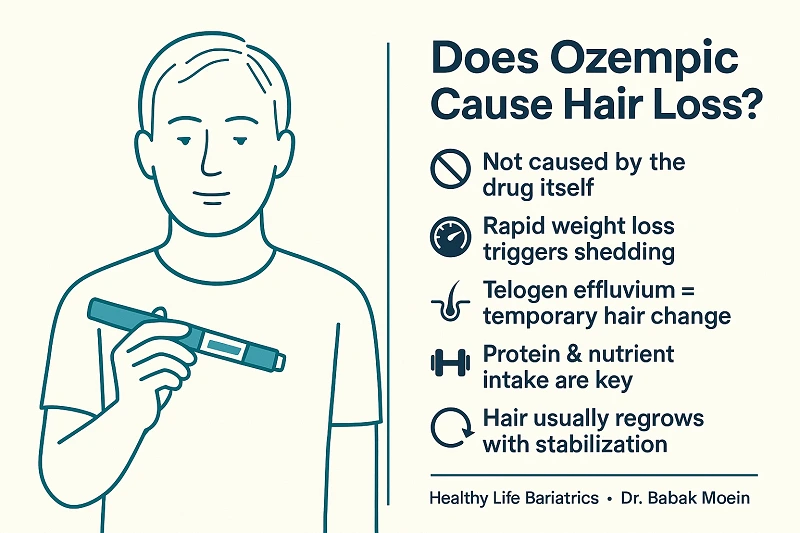
Currently, there isn’t any evidence that Ozempic directly damages hair follicles. However, the most frequent reported cause relates to Telogen Effluvium, a condition whereby hair follicles fall into a resting phase prematurely.
Telogen effluvium develops as a result of stress, such as rapid weight loss, that pushes hair follicles out of the active growth phase into the resting phase. After several weeks or months, the hairs that were resting fall excessively.
This is much like what occurs in humans who undergo bariatric surgery. Indeed, most patients who undergo a sleeve gastrectomy will see a transient increase in shedding. Of course, this happens due to changes in caloric intake and a transition in their metabolism. As with hair shedding after gastric sleeve surgery, the rate of weight loss, rather than the medication, is clearly the primary issue.
In most people, hair regrowth occurs once nutrition, metabolism, and weight stabilize.
When patients lose weight quickly, whether through medication, surgery, or extreme diets, the body prioritizes core survival functions over cosmetic ones. Hair growth, while important to many people, is not considered essential from a metabolic perspective.
Several changes caused by Ozempic contribute to temporary thinning:
Reduced appetite often leads to unintentional protein deficiency. Because hair is composed largely of keratin, insufficient protein intake limits healthy follicle activity.
A sharp reduction in calories is one of the strongest triggers of telogen effluvium.
Decreases in iron, zinc, B-vitamins, and vitamin D undermines hair growth.
Thyroid hormones, cortisol, insulin, and estrogen all influence the hair cycle; these naturally shift during weight loss.
GLP-1 medications slow stomach emptying, which may impact absorption in some patients.
These mechanisms explain why individuals may shed more hair even when the medication is working successfully.
While anyone can experience telogen effluvium, certain groups have a higher risk profile:
This overlap explains why some individuals see visible changes when they review Ozempic weight loss before and after pictures, noticing both positive changes in body composition and temporary shifts in hair volume.
| Risk Factor | How It Contributes to Hair Loss |
|---|---|
| Rapid Weight Loss | Triggers telogen effluvium by shifting follicles into the resting phase. |
| Low Protein Intake | Reduces keratin synthesis needed for healthy hair growth. |
| Iron or Zinc Deficiency | Weakens follicle metabolism and accelerates shedding. |
| Hormonal Changes | Weight loss-related shifts affect thyroid and stress hormones involved in hair cycling. |
| Stress or Illness | Elevated cortisol pushes follicles into the telogen phase. |

Although temporary shedding can feel stressful, most patients can significantly reduce the severity by taking the following steps:
Aim for 60–80 grams of protein daily to support keratin production and stable follicle activity.
Bloodwork may include ferritin, iron, zinc, vitamin D, folate, and vitamin B12. Correcting deficiencies helps stabilize the hair cycle.
Your medical provider may adjust your semaglutide dosage to maintain a steady, controlled pace.
Proper hydration reduces scalp dryness and supports hair shaft strength.
Meditation, yoga, walking, and proper sleep help normalize cortisol levels.
Some individuals choose regenerative scalp therapies, and advances in biologic treatments such as exosome hair treatment may support a healthier growth environment for patients experiencing thinning.
Sudden discontinuation may worsen metabolic instability and prolong shedding.
If shedding continues beyond 3–4 months, a full bariatric evaluation may uncover additional contributors such as thyroid imbalance or severe micronutrient deficiency.
It is important to speak with a healthcare provider if you experience:
A thorough evaluation at Healthy Life Bariatrics includes laboratory assessment, nutritional review, scalp health analysis, and a customized weight-management plan to reduce stress on the hair cycle.

Patients will often report other issues that may be tangentially related to their stress level. Among the most frequent of these symptoms, particularly as initial treatments begin, would be any form of gastrointestinal side effects such as nausea, constipation, or bloating.
A further concern is pancreatitis. People with abdominal pain may look up Ozempic pancreatitis symptoms, which indicate a risk that, although small, is of clinical importance.
We also observe patients who report changes in their intimate body area and ask whether these changes might be linked to hormonal changes or hydration levels. Consequently, there would be inquiries associated with Ozempic vulva side effects, which may occur more often in patients going through dehydration or vaginal changes related to fast weight loss.
Finally, some patients will often inquire about metabolic rebound or weight regain if their medication is abruptly discontinued. Such issues demonstrate the importance of understanding what happens when you stop taking Ozempic.
These aspects form a background that may or may not affect the hair-growth cycle.
If you are experiencing hair loss while taking Ozempic or want to explore comprehensive weight-loss strategies with medical guidance that protects your metabolic and hormonal health, our team is here to support you.
📞 Call us: 310-861-4093
📍 Address: 2080 Century Park East, Suite 501, Los Angeles, CA
📝 Secure Contact Form:
https://healthylifebariatrics.com/contact/
A consultation with Dr. Babak Moein, board-certified bariatric surgeon, can help you determine the most appropriate path toward sustainable weight control and optimal hair health.